
Highland City Directory Shelves
The best inventory is not one unbroken Highland run. It is a set of named institutional collections with different dates and access rules. The Indiana State Library’s 2025 guide lists countywide Polk volumes, while LCPL states that local directories are in its Indiana Room. Highland history titles add names, photographs, groups, schools, and places that a brief directory entry may omit.
| Collection | Years | Where held | Access |
|---|---|---|---|
| Polk countywide directories | 2012, 2015, 2020 | Indiana State Library; verify LCPL copies | Inspect pages for Highland entries |
| LCPL local city directories | Exact run not listed online | LCPL Indiana Room | Ask for named year and reverse volumes |
| Highland Diamond Jubilee | 1910–1985 | Indiana State Library Reference | Reference copy |
| Pictorial History of Highland | 1991 and 2001 | Indiana Reference and closed stacks | Librarian or stack request |
| Ridge reflections | 1985–2000 held | Indiana State Library closed stacks | Request issues |
| LCPL obituary indexes | 1857–1938 and 1921–current | LCPL index service | Online search and research help |
| Federal census | Public through 1950 | NARA, FamilySearch, HeritageQuest, LCPL | Online or library database |
| WPA indexes | Birth 1882–1941; marriage 1850–1920; death 1899–1920 | State Library and original keepers | Index lead, then custodian copy |
The years must be read literally. A countywide Polk volume may contain Highland addresses, but only page inspection can confirm them. An index points to evidence; it is not the certified record.
Highland Has a Directory Gap
The Indiana State Library Lake County directory guide names Polk countywide directories for 2012, 2015, and 2020, plus selected runs for Crown Point, East Chicago, Gary, Griffith, Hammond, Hobart, and Whiting. It does not list a Highland-specific run. That is not proof none was printed. It is a documented catalog gap.
Do not replace that gap with an unverified commercial volume. Ask LCPL staff for county directories, telephone books, address-first or criss-cross sections, and the exact year required. Give the house number, street suffix, surname variants, and approximate date. Staff can also explain whether a volume is on a shelf, microfilm, a database, or at another institution.
Research tip. Treat “not listed in the guide” as a reason to ask a librarian, not as evidence that Highland residents were absent.
Use the Highland Indiana Room
The Lake County Public Library genealogy page makes the Merrillville Indiana Room the strongest local starting point. It identifies local directories and histories, microfilm, newspapers, school enumeration indexes, yearbooks, Crown Point naturalizations, and research help. Ask-a-Librarian can help locate or copy an obituary when a visit is not practical.
The library’s genealogy databases include Ancestry Library Edition on LCPL computers, FamilySearch, Fold3, HeritageHub, HeritageQuest, Hoosier State Chronicles, NewspaperARCHIVE, regional newspaper sources, and district yearbooks. Access differs. Some tools need a library computer, card, affiliate site, or vendor login. LCPL notes that its FamilySearch affiliate access can expose about 25 percent more records than a standard home account.
Review the LCPL genealogy collection before requesting a Highland city directory volume.
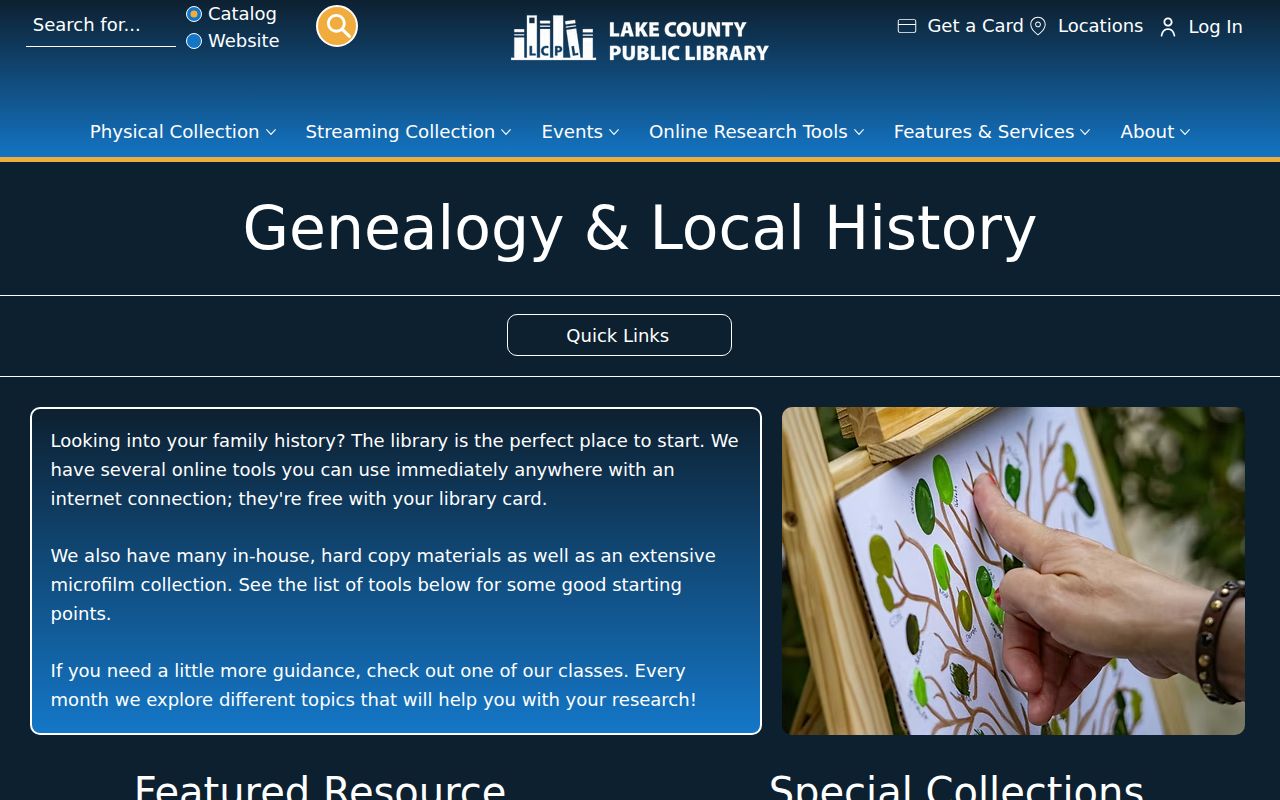
The captured library page confirms that staff help and local collections remain essential when an exact title is not fully described online.
Read a Highland Directory Entry
A real entry must be transcribed, not paraphrased from memory. No stable Highland printed page or abbreviation key was captured in the research, so exact symbols should be checked in the front matter of the volume. Record the neighboring entries too, especially in a street section, because they help confirm that the correct road and sequence were used.
| Name | Surname, given name, and initials exactly as printed |
|---|---|
| Household notation | Spouse, widow, or relative text only when the volume states it |
| Address | Street number, spelling, suffix, city label, or post-office box |
| Work line | Occupation or business, where included by the publisher |
| Edition details | Year, publisher, page, volume title, scan number, and call number |
| Context | Owner or renter mark, telephone, abbreviation key, and nearby entries if present |
- Criss-cross directory
- A directory arranged by street and house number, used to move from address to a listed name.
- Householder index
- A name or address list centered on the person identified by the publisher as the householder.
- Abbreviation key
- The volume’s own legend for short forms and symbols. Photograph or copy it before interpreting an entry.
A city directory is a dated publication, not a live occupancy roll. A work address, institution, or mailing label can look like a home unless the entry and key are read together.
Reverse Highland Addresses Carefully
Later directories may include an address-first section. Start with the exact house number and street spelling used during that year. Copy the listed name, then turn to the alphabetical section to verify the full entry. Compare the year before and after. A changed number, move, spelling variant, or business listing can explain an apparent break.
For present-day parcel work, use the Highland street directory, which owns the assessor, GIS, permit, and deed workflow. Historical city directories should supply a dated name or address, then a census, deed, obituary, or newspaper should test it. A single printed entry should not be stretched into a claim about later residence.
Note: Cite the directory title and page so another researcher can reproduce the Highland address search.
Trace Highland Families Across Years
Directories can fill the years between federal census schedules. As of the research date, the 1950 census is the latest fully public decennial census under the 72-year rule. A directory entry near a census year can help resolve initials, street numbers, and moves, while the census may add relationships and household details that the directory omitted.
- Find the earliest likely city directory entry and copy it exactly.
- Follow the surname forward and backward through available editions, recording gaps rather than guessing.
- Check the address-first section and neighboring listings when a reverse volume exists.
- Pair the dated address with a public census, assessor or deed date, permit, and newspaper notice.
- Close the trail with an obituary, cemetery lead, probate file, or later directory, marking where evidence ends.
Surname spelling, maiden names, initials, and nearby municipal labels matter in Lake County. Highland’s industrial, immigrant, agricultural, and suburban eras produced records in more than one language and institution. Two or three independent sources at the same address are stronger than one city directory hit.
Highland Obituary Indexes Extend Entries
LCPL’s obituary tools cover the Lake County Register and Star from 1857 through 1938 and the Post Tribune or Gary Post Tribune from 1921 to the present. Search fields include a full or partial name, maiden name, date, city, and age. An obituary may supply relatives, former places, organizations, funeral home, and cemetery, but editorial details still need confirmation.
Start with a distinct surname from the directory. Retrieve the full notice rather than relying on the index line. Compare names and dates with a death record, cemetery source, census, or probate file. Newspaper databases listed by LCPL also include The Times and other regional coverage, which is useful when Highland news appeared under a broader Northwest Indiana heading.
Highland Histories Add Local Names
The State Library’s Lake County history holdings name three especially useful Highland groups. Highland Indiana Diamond Jubilee, 1910–1985 is in Indiana Reference. The Highland Historical Society’s Pictorial History of Highland, Indiana has 1991 and 2001 parts, with the later part in closed stacks. Ridge reflections issues from 1985 through 2000 are held in closed stacks.
These works can add civic groups, schools, businesses, photographs, and development context to a short city directory line. They remain finding aids. Verify a named person through the original directory, newspaper, census, or public record before drawing a conclusion.
See the State Library holdings page before requesting a title.
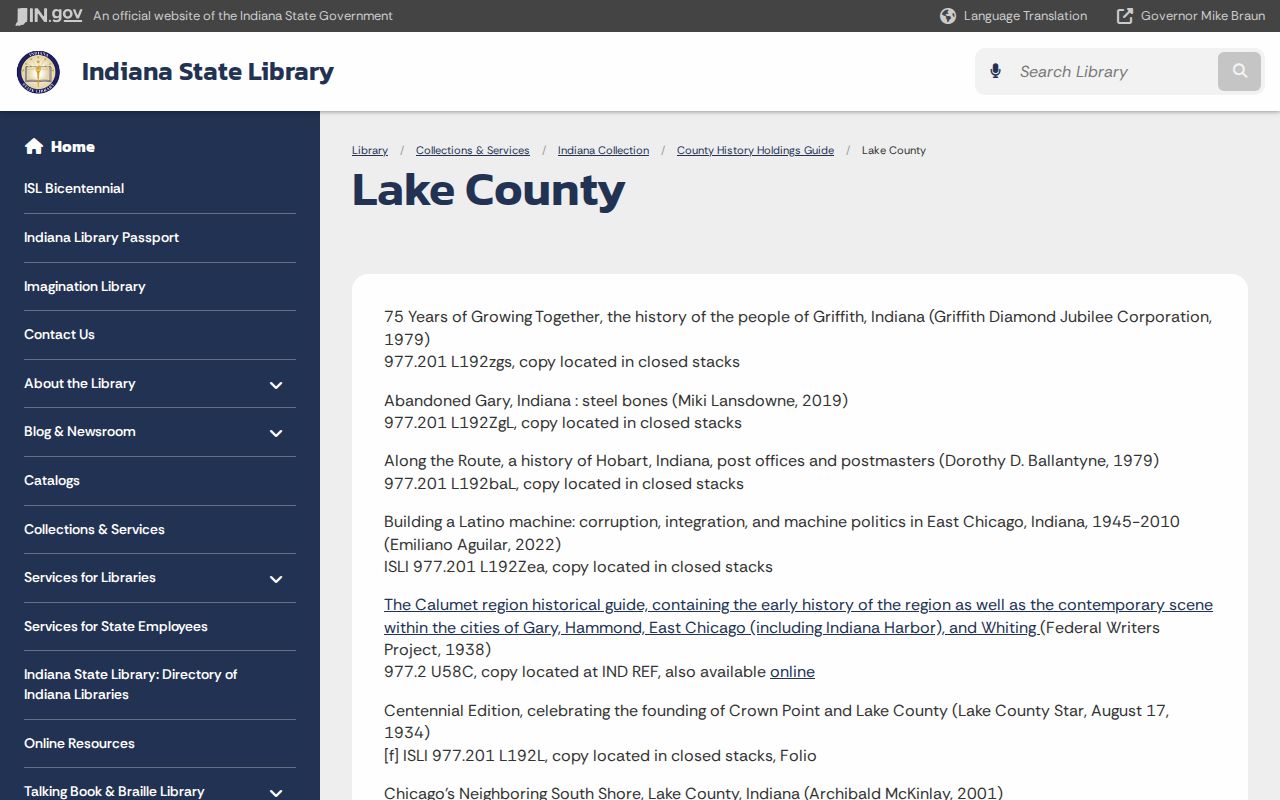
The holdings capture provides the exact Highland titles, dates, and stack context needed for a precise request.
More Highland Historical Directory Clues
Yearbooks can identify former students, photographs, clubs, and class context without making a claim about current residence. LCPL lists district high-school yearbooks and early school material, though the full year-by-year run is not public. The Crown Point naturalization index covers 1854 to 1929 at LCPL, while the State Library guide describes a broader Lake County index through 1932. Naturalization records may add birthplace, residence, court, witness, and declaration clues where fields survive.
WPA indexes offer birth, marriage, and death leads for named periods, but the original Lake County Clerk or Health record remains the better authority. Sanborn guides list Gary, Hammond, Griffith, Hobart, and Lowell sets, not a verified Highland set. A neighboring-city map can show regional context near a boundary, but it cannot stand in for a Highland parcel.
Cite Highland City Directories Fully
A useful citation includes the person as printed, street address, directory title, edition year, publisher, page, call number or image number, institution, and access date. Include the abbreviation key when a symbol affects meaning. State whether the entry came from the alphabetical or criss-cross section. If a county heading or nearby city label appears, preserve it rather than silently changing it to Highland.
When no edition covers the needed year, document the gap and move to census schedules, newspapers, yearbooks, deeds, permits, obituaries, or histories. Do not infer that a person vanished simply because a volume is missing or the name is unlisted. The Highland city directory trail is most reliable when its date and limits remain attached to every finding.