
Highland Previous Resident Sources
A Highland address can outlast its street label, owner, and building. Start with the source closest to the period being studied. Current parcel data fixes the legal parcel. Recorded deeds supply transfers. Directories and census schedules add household snapshots, while permits and local histories explain changes to the site. The table separates what each source proves from what it merely suggests.
| Source | Years or cutoff | Where held | What it shows |
|---|---|---|---|
| XSoft parcel data | Current as of August 24, 2026; sample cards show 2023-2025 values | Lake County Assessor | Owner, situs, mailing address, parcel ID, legal description, values, and districts |
| Recorder index and images | Online cutoff not visible before login | Lake County Recorder portal and office | Deeds, grantors, grantees, dates, plats, liens, and releases |
| Local directories | Exact Highland run not published | LCPL Indiana Room | Year-specific name-to-address or address-to-name leads |
| Countywide Polk directories | 2012, 2015, and 2020 | Indiana State Library and possibly LCPL | Countywide entries that must be checked for Highland |
| Federal census | Public through 1950 | NARA and library databases | Households at one historical moment |
| Obituary indexes | 1857-1938 and 1921-current runs | Lake County Public Library | Family, place, group, and death leads |
| Highland permits | Archive dates not published | Town building department | Project address, applicant, owner, work, contractor, approvals, and inspections |
For recent previous residents, begin with the parcel and deed path. For a mid-century household, pair directories with the public census. Older land questions may require deed books, plats, early land-sale indexes, and help from a librarian or the Recorder counter. A source date belongs beside every name.
Fix the Highland Parcel First
The Lake County XSoft parcel search accepts an owner, address, or property number. Its result grid exposes the property ID, owner name, address, city, map, detail, and services routes. Open the detail card and copy the Highland situs address, mailing address, parcel ID, legal description, district, property class, and transfer fields exactly as shown.
The parcel ID is often a stronger bridge than the street text. A legal description may use a subdivision and lot, such as the research sample from Krumm's Second Addition. Parcels can also be split, joined, or replatted. When that happens, ask the Recorder or Surveyor to connect the old and new parcel references. Never turn an out-of-town tax mailing address into a claim that the Highland property is elsewhere.
Note: The assessor names a recorded owner, not every person who lived at the Highland address.
Walk Highland Deeds Backward
The Lake County deed chain begins with today's parcel card and moves from each buyer to the seller before them. The Recorder advanced search route redirects an unauthenticated visitor to an account login. That gate means the public pages do not reveal the first searchable year, full result fields, image range, or copy price. Do not guess at a cutoff. The Recorder office can confirm whether an older book or image is available.
- Save the current owner, parcel ID, subdivision, lot, and legal description from XSoft.
- Search that owner as the grantee, meaning the buyer, and identify the deed by date and legal description.
- Record the grantor, meaning the seller, plus the instrument or book and page reference.
- Search that seller as a grantee in an earlier period. Repeat while the legal property stays aligned.
- When the web index ends, call or visit the Recorder for the named year, book, plat, or instrument.
- Grantor and grantee
- The grantor conveys an interest; the grantee receives it.
- Chain of title
- The linked sequence of recorded transfers for the same land.
- Legal description
- The formal land description, which is more stable than a postal address.
- Instrument number
- The Recorder's identifier for a filed document.
A deed proves a legal transfer. It does not prove that either party occupied the Highland home. Mortgages, liens, releases, and plats can add dates or names, but they still belong to the title record. Household evidence comes next.
Highland Deeds Behind Login
The account gate is an important Highland previous residents search limit. The Lake County Recorder keeps deeds, mortgages, liens, releases, leases, plats, assumed names, and related instruments at Building A, 2293 North Main Street in Crown Point. The office is open weekdays from 8:30 a.m. to 4:30 p.m. and lists 219-755-3730.
Online Search and Advanced Search both route a guest to login. Registration asks for a username, password, email address, first name, and last name, with phone optional. Since no account was created during research, the correct fallback is direct: give staff the party name, date range, parcel ID, legal description, subdivision, or known instrument. Ask whether the index, image, inspection, plain copy, or certified copy is available.
The Lake County Recorder search screen shows the access boundary a Highland deed researcher meets online.
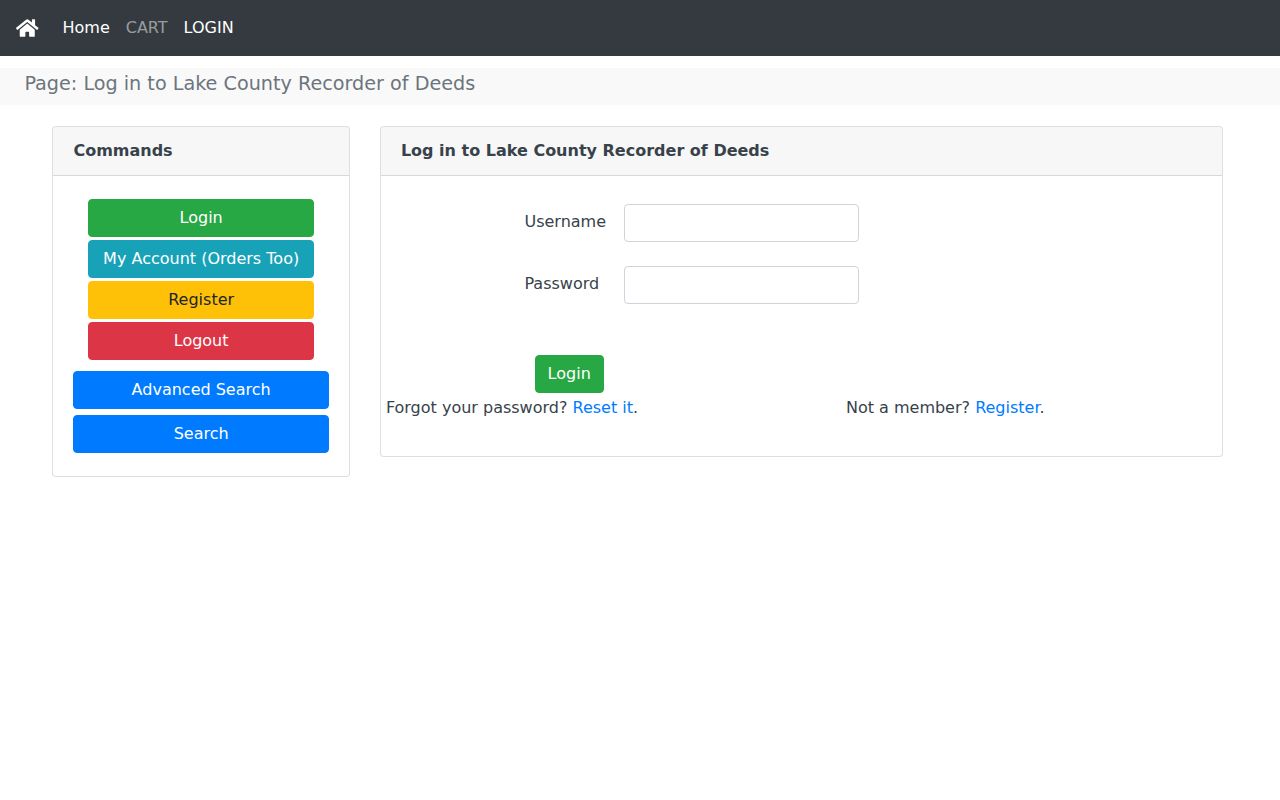
The captured login route confirms why an office call is needed before claiming online years or fields.
The Recorder is not the keeper of court orders, wills, marriage licenses, or birth and death certificates. Probate belongs with the Clerk. Vital certificates belong with Health or the state. Choosing the right counter prevents a false dead end.
Layer Highland Past Households
Ownership is only half of previous-resident research. Ask the LCPL Indiana Room for a reverse or criss-cross volume near each deed date. A criss-cross directory is arranged by street or phone rather than only by surname. The public library page confirms local directories but does not list a complete Highland year run, so a narrow address-and-year request is more sound than claiming continuous coverage.
Pair the nearest directory with a census year. Federal schedules are public through 1950 under the 72-year rule. Record the street, house number, enumeration context, names, ages, relationships, and source image. An enumeration district is the geographic area assigned to one census taker. Boundaries and street labels can shift, so use the period ward or township context and keep spelling variants.
- Place the deed transfer dates on a simple timeline.
- Check the closest directory year before and after each transfer.
- Compare a nearby public census schedule when the era permits.
- Use newspapers, probate, and obituaries to explain a move, death, or estate transfer.
- Cite the year, title, page, and image for every household lead.
The full Highland directory holdings and how to read their abbreviations belong on the Highland city directories page. Here, each volume serves one purpose: testing who may have occupied the same address near a known deed date.
Highland House Research Help
The Indiana State Library property research guide links directories, recorder documents, newspapers, parcel records, and fire-insurance maps as separate forms of evidence. Its screen shows why a house history grows from several dated sources rather than one occupant list.
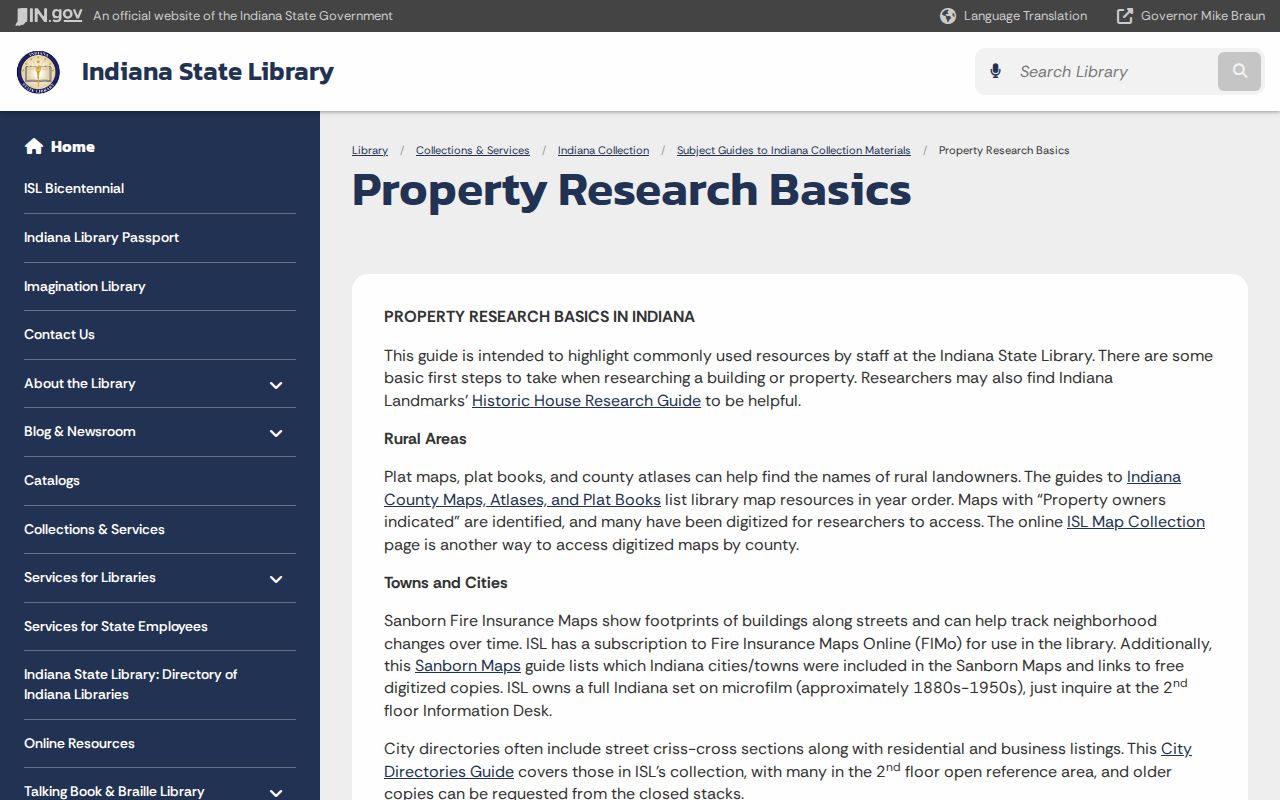
The guide supplies a sound research order, but certified deeds still come from Lake County and local directory questions still belong with LCPL.
LCPL also offers Ask-a-Librarian. Send one Highland address, a short date span, any former owner name, and the exact item sought. Ask whether the response is a catalog record, index, scan, transcription, or original. There is no published separate Highland house-history service or fee schedule, so keep the request narrow and confirm copy terms with staff.
Maps and Highland Permit Dates
Fire-insurance maps can show a building footprint, use, construction detail, and surrounding streets. The Indiana State Library Sanborn guide lists sets for Gary, Hammond, Griffith, Hobart, and Lowell, but the inspected lists did not identify Highland. That absence is a coverage gap, not proof that a Highland building did not exist.
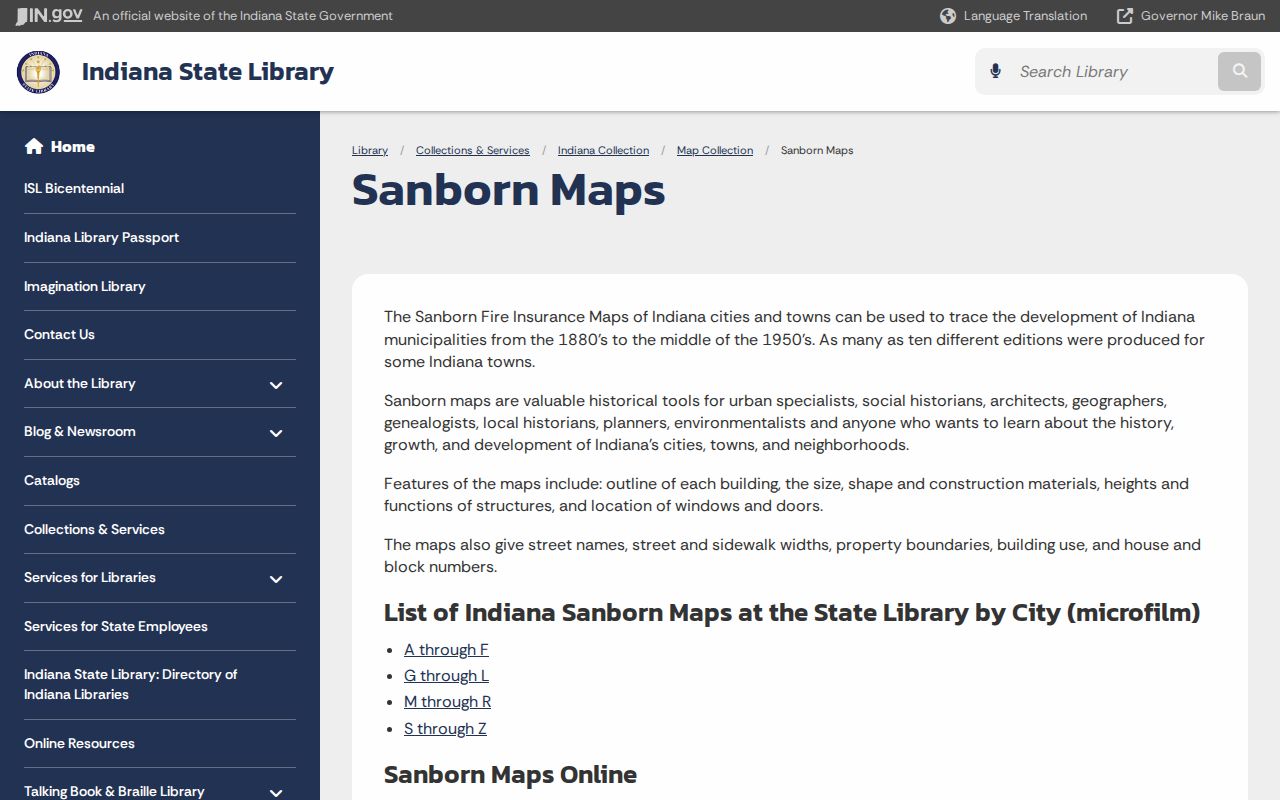
Use a neighboring-city sheet only as regional context. Verify municipal limits and the period street name before linking it to a Highland parcel.
Highland's building permit form captures project address, owner, applicant, subdivision and lot, zoning, construction type, contract cost, contractors, approvals, and inspections. No searchable permit archive was found. Ask the town for a defined address and date range under the Indiana Access to Public Records Act. A permit can date work and name the applicant, but it cannot establish a complete household.
Highland History Beyond Directories
The State Library holds Highland Indiana Diamond Jubilee, 1910-1985, two parts of Pictorial History of Highland, Indiana, and Ridge reflections issues from 1985 through 2000. These works can add street photographs, civic groups, schools, businesses, and neighborhood change to a previous-resident trail. They are finding aids, not title or occupancy records.
Highland's growth along the sand ridge and its sharp mid-century expansion make period context useful. Lake County's WPA indexes, early land-sale records, naturalizations, newspapers, yearbooks, and census schedules preserve different slices of that change. Search surnames with initials, maiden names, and variant spellings. Then corroborate the result with the original office record whenever possible.
Note: No official Highland street-renumbering list or dated Recorder imaging cutoff was found, so neither should be inferred from adjacent towns.
Close Highland Resident Trails Carefully
LCPL's obituary index covers the Lake County Register and Star from 1857 through 1938 and the Post Tribune or Gary Post Tribune from 1921 to the present. Search a full or partial name, maiden name, date, city, and age. A notice may supply relatives, a former address, a funeral home, cemetery, or organization. Verify those details against a death record, cemetery source, or probate file.
If an owner died, the Lake County Clerk keeps wills, trusts, and probate records. An estate deed may name a personal representative or heir. If a corporation or trust appears in the chain, follow the entity record or recorded instrument instead of treating its mailing address as a private household. Stop where the documents stop. A gap is more accurate than a guess about where a living person moved.
Lawful use. Research Highland previous residents for house history, family history, or an estate matter. Never use an address trail to watch, intimidate, or harm a living person.